- A.thentic Jong Hee's Newsletter
- Posts
- The 35th Newsletter
The 35th Newsletter
About my summer time, current feelings of Koreans now

Jong Hee Kim
September 15, 2025
Hi there
This is A.thentic Jong Hee
This is 35th newsletter for you.
How are you?
It has been a long time since my last newsletter.
When I wrote the previous one, summer was just beginning — and now, as I write this new newsletter, summer is fading and autumn is almost here.
I hope you’ve been doing well.
Beach views in this summer season
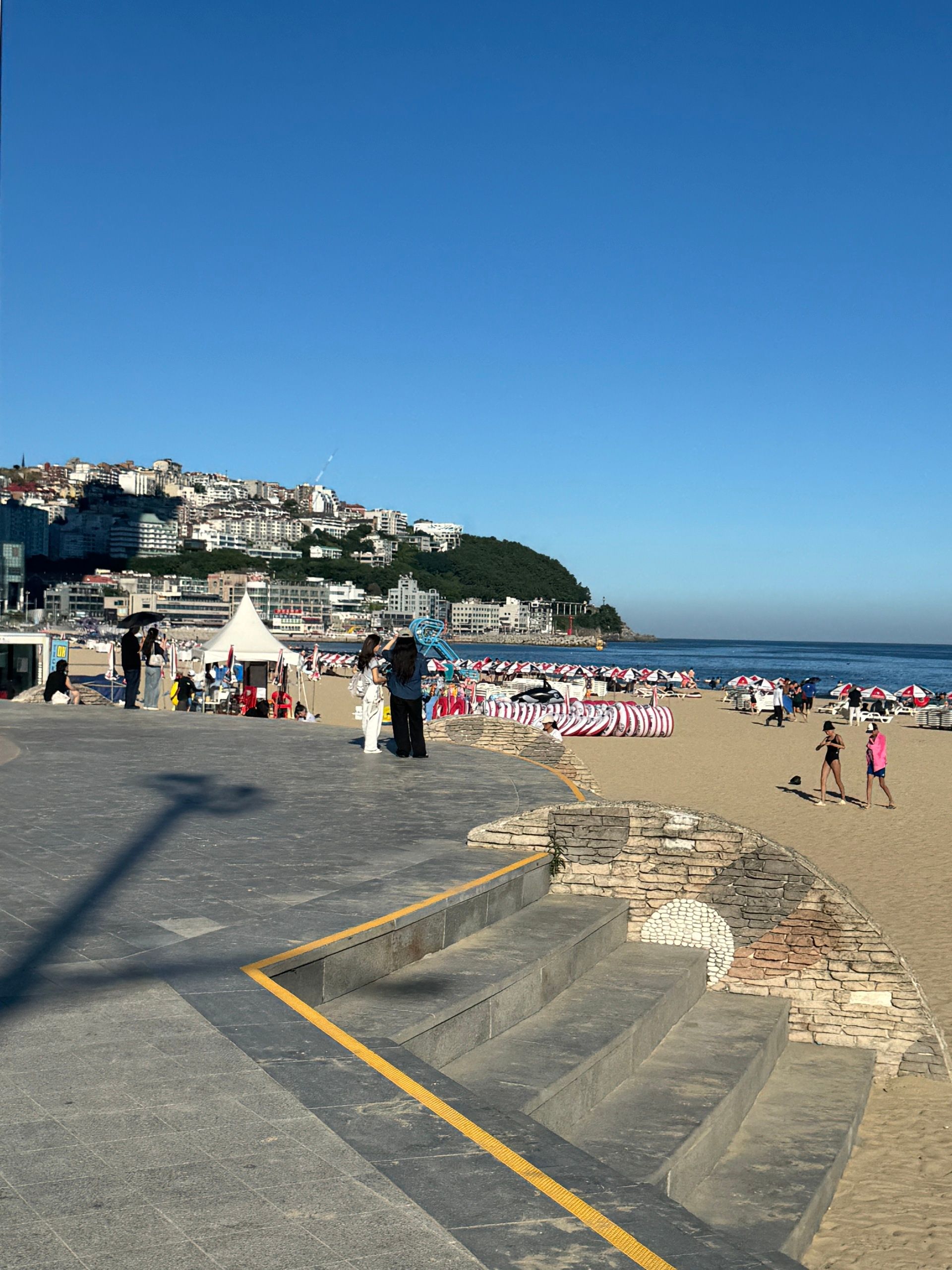 Haeundae Beach |  My Jogging path view | 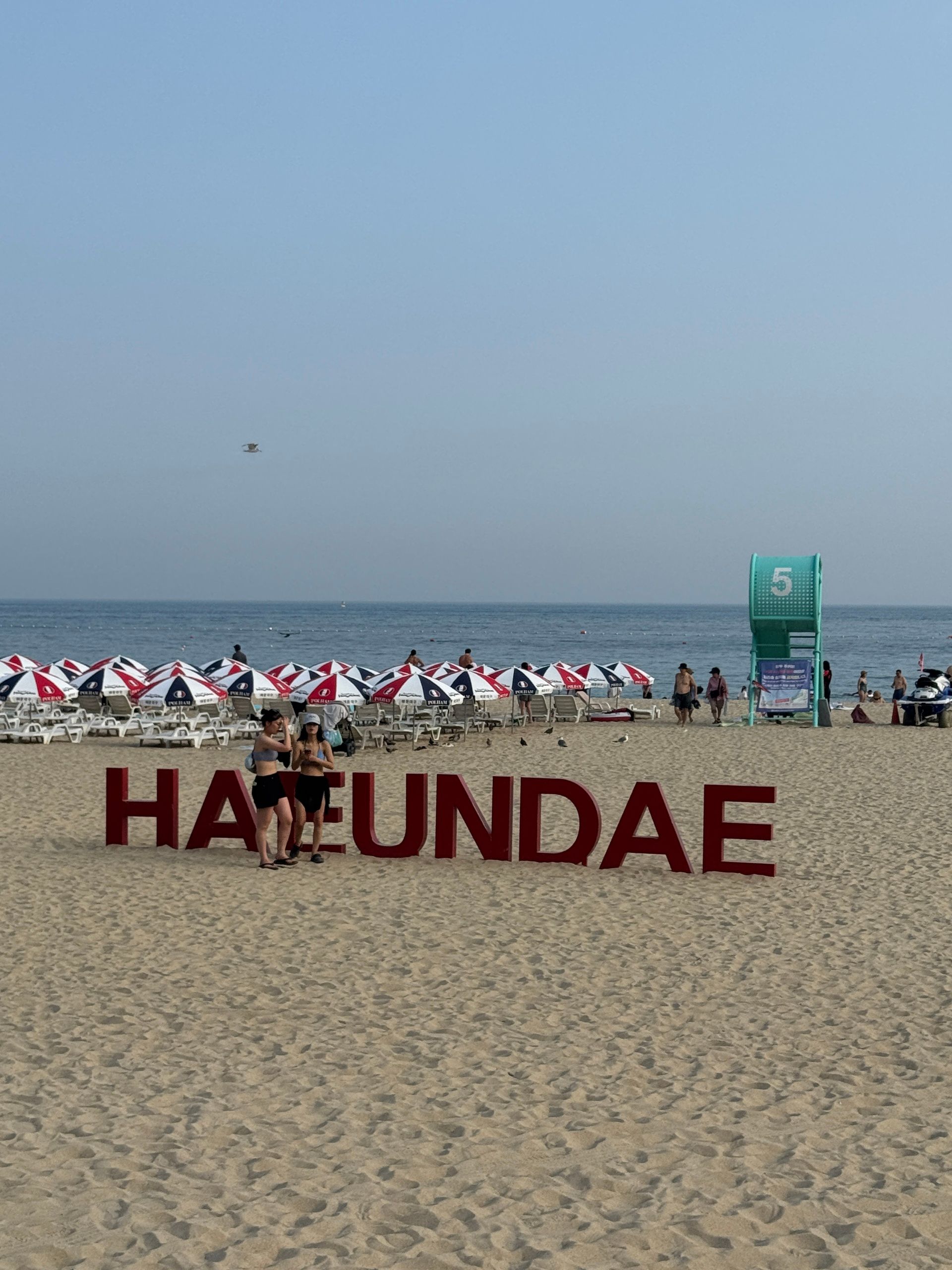 Haeundae Beach |
(I’ll explain these later)
As you may have noticed, I rarely post on Instagram these days. I decided not to be too involved with social media, especially Instagram, in order to take care of my mental health. I had been feeling depressed and weighed down by a certain atmosphere.
My current follower count is around 13.5K, but actually I don’t feel that I deserve such a number. To me, even 1,000 or 2,000 would be enough. Over 13K? It feels meaningless.
In the past, I used to go through my followers one by one and remove those who never engaged with my posts or music, people who I felt would never actually listen to what I create. But I eventually grew tired of doing that. I realized I’d be much happier with just a few dozen, or maybe a few hundred, followers I could genuinely connect with.
Over time, I’ve received all kinds of strange requests. Some people asked me if I knew of any job openings in Korea, while others even asked if I could introduce them to a Korean boyfriend. (I always wondered why they thought they could just meet a random Korean man through Instagram greetings, and why they believed such a thing was possible in the first place.) Whenever I received DMs like that, I told them to unfollow me and I blocked them.
On another note, some kind-hearted girls who followed me once reached out, asking for advice when their so-called “Korean boyfriends” suddenly stopped contacting them. The moment I heard their stories, I suspected those men weren’t Korean at all, but foreigners pretending to be. And when I saw the photos they shared with me, I became certain.
People outside Korea or East Asia (Korea, Japan, China) often can’t tell the difference between our faces just by looking at photos—just as many Koreans can’t distinguish between, say, a Spaniard and an Italian unless they’ve lived in the US for a while like I have. But Koreans can immediately tell who is Korean and who isn’t. Even if someone from the Middle East or elsewhere tries to look Korean, we can instantly recognize they’re not. But for people living far away, it’s not easy to distinguish—and that’s why they’re so often deceived.
The photos I saw were laughable. Anyone could see the men weren’t Korean, but they tried to fake it by dressing up or staging their surroundings to look “Korean.” It was so ridiculous—cheap, childish, and unconvincing. This kind of case wasn’t just once or twice. I even thought of writing a whole newsletter on this issue, but decided not to. Still, when I see women from certain cultural or religious backgrounds being deceived like this, I get very upset.
I’ve come to deeply respect and admire that culture, ever since I was supported by a teenage girl from that community when I had fewer than 10 followers. Her life was modest, disciplined, and graceful, and it touched me deeply.
Sadly, I later found out that a foreign man, pretending to be my friend, contacted her and pressured her to share her photos and contact information. She showed me screenshots of their conversation on Instagram, and I was shocked. She told me she had cried out of fear. I apologized to her in his place, and thought it would be safer for her if she stayed away from me entirely. I tried to catch him but he disappeared forever. I still feel sorry for her—she was like a little niece to me. We have no contact anymore since then.
Anyway, if you ever come across such scams, please reach out to me. And above all, don’t trust people you only know online.
Let me say this again: a decent, normal Korean man would never ask you to send thousands of U.S. dollars, saying he needs it for marriage expenses. No matter how many times someone confesses their love to you online, please don’t believe this kind of thing. Remember, scammers prey on the kind and gentle hearts of foreign women.
To be honest, even I have no real way to prove that I’m real ‘A.thentic Jong Hee’ and Korean, that I live in Busan, that I play the piano, compose music, or make videos. (I’ve done Instagram Lives, spoken with my own voice, played my instruments, and written newsletters like this—but in truth, there’s no perfect way to prove myself online.)
Anyway, this summer, I decided to focus only on myself.
During the summer, I often jogged all the way to the beach, change into swimwear, dive into the sea, swim for a while, then change back into my running clothes and walk home listening to music. After coming out of the cool water and strolling through the city, I felt ‘happy’. That was the only time I truly felt good.
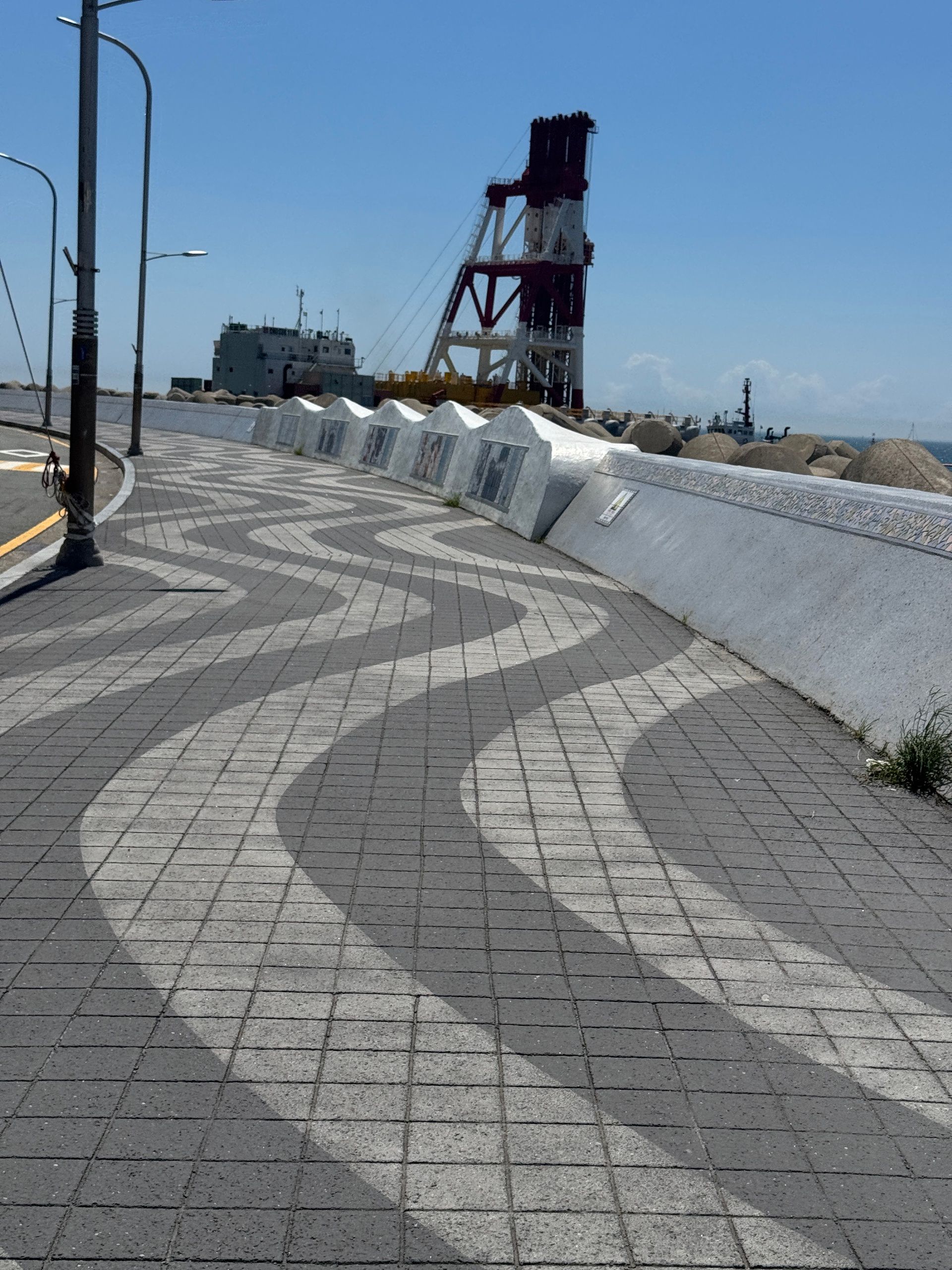 Running path to the beach | 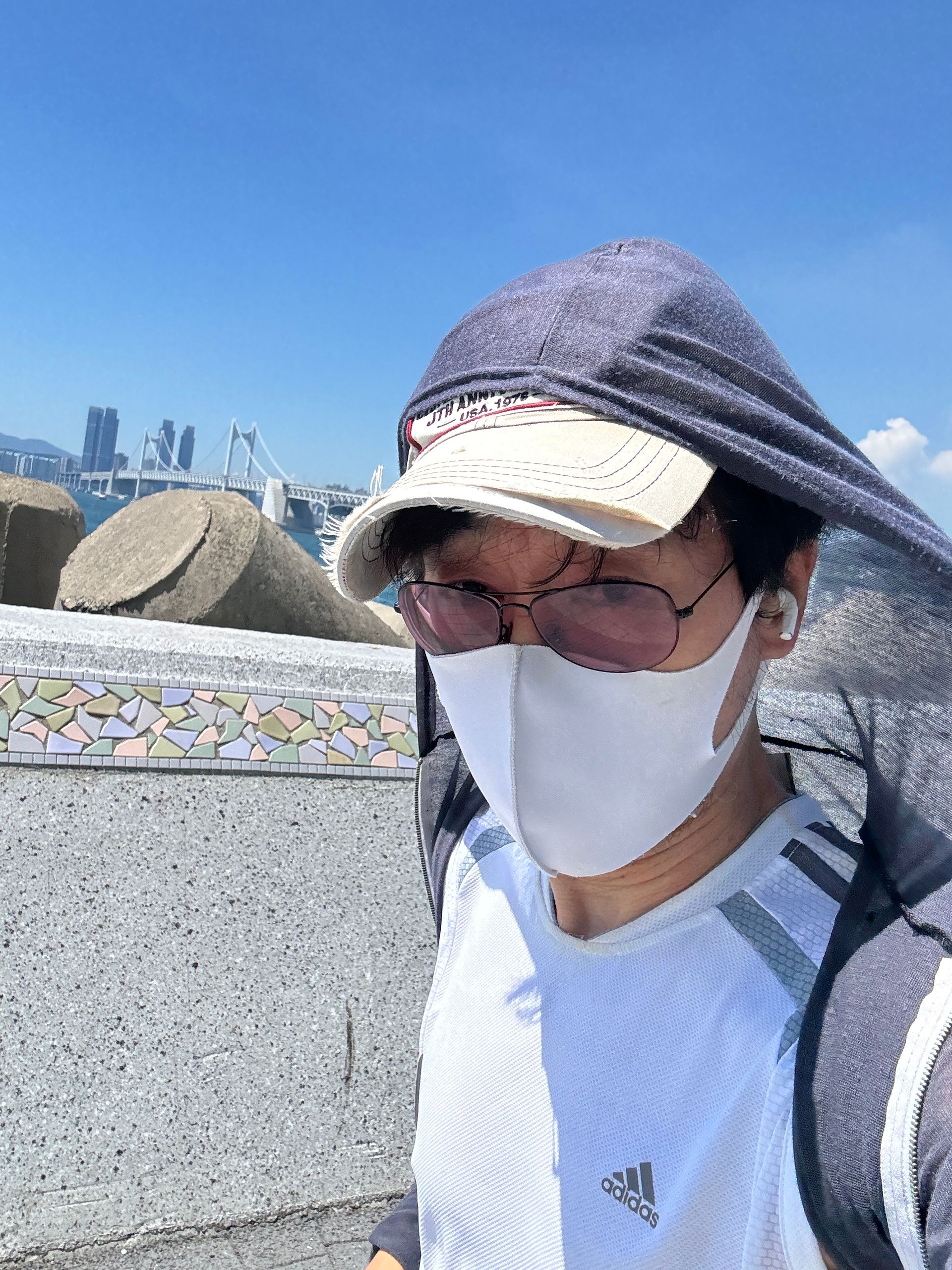 Jogging to the beach |  Covered up to protect my face from the burning sun. |
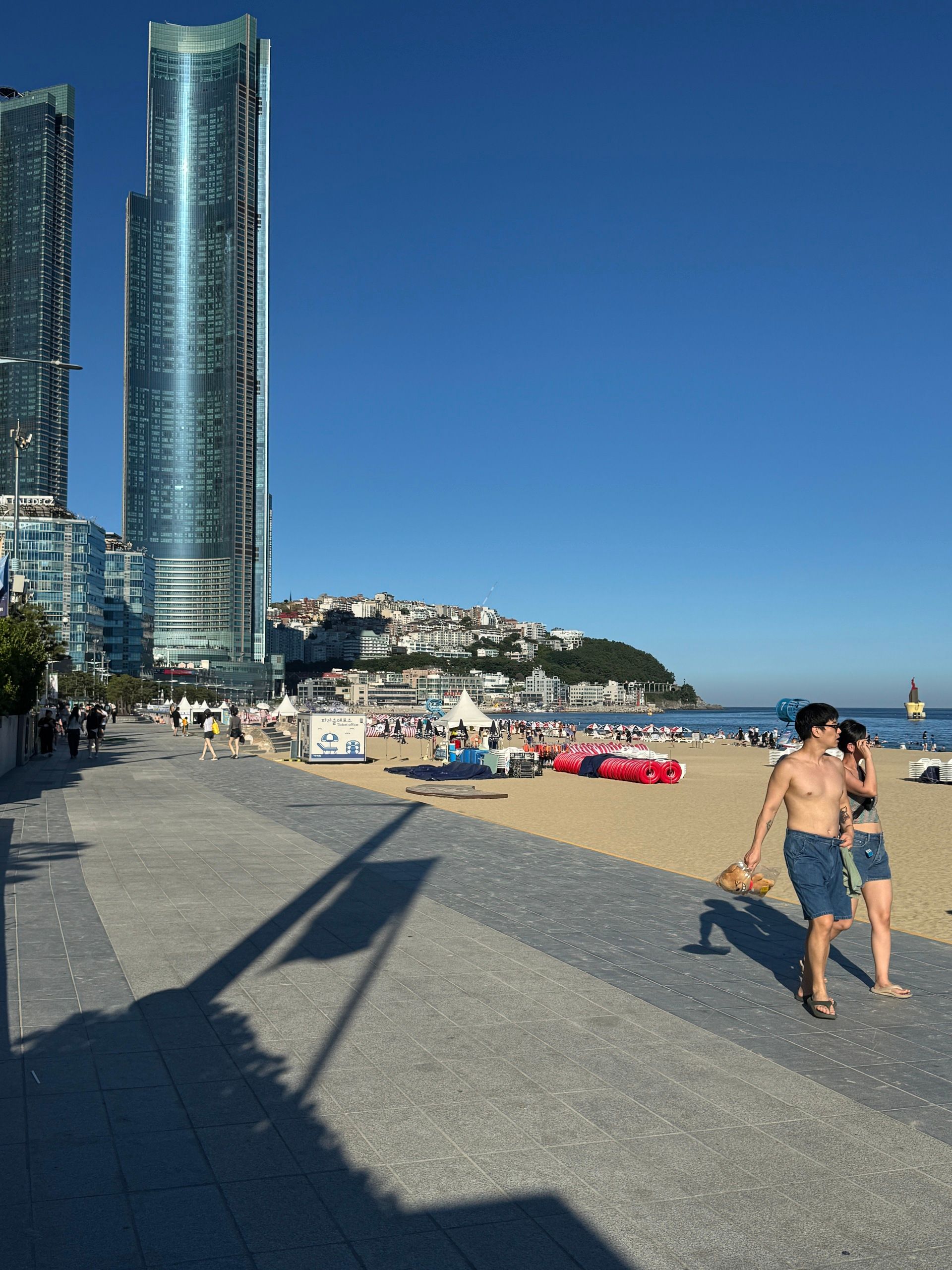 Haeundae Beach | 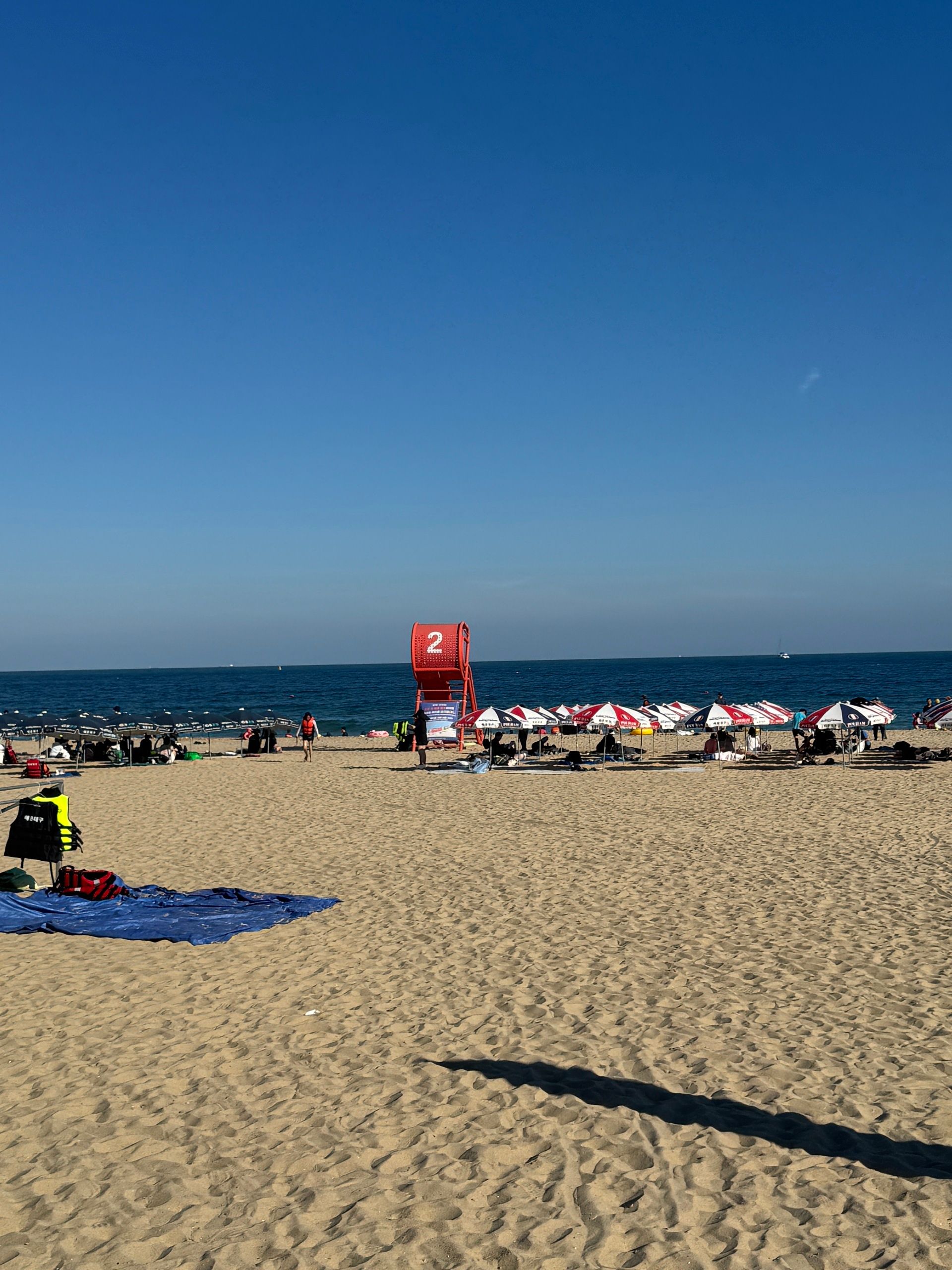 | 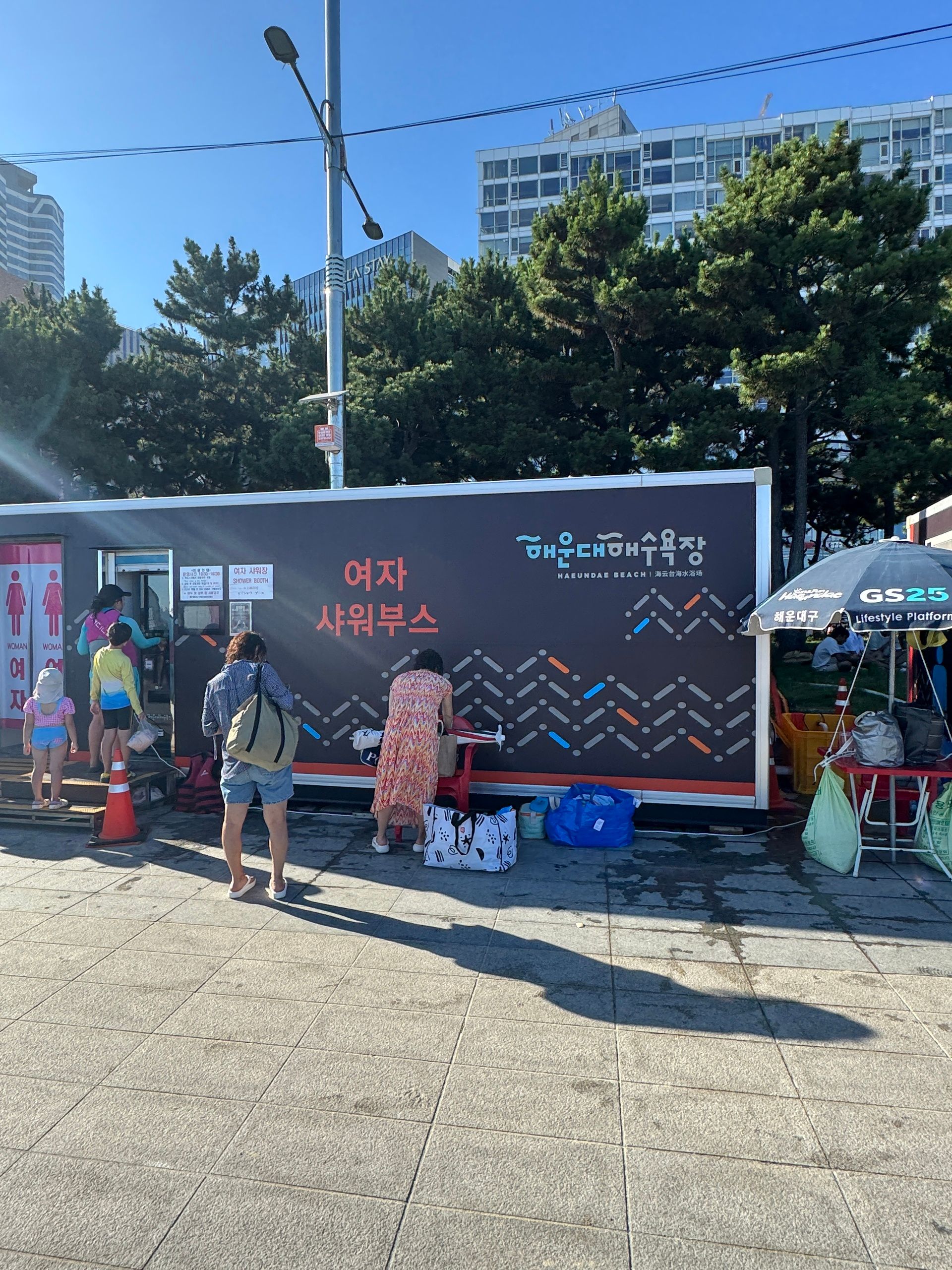 Shower facilities at the beach |
 Walking back home 1 |
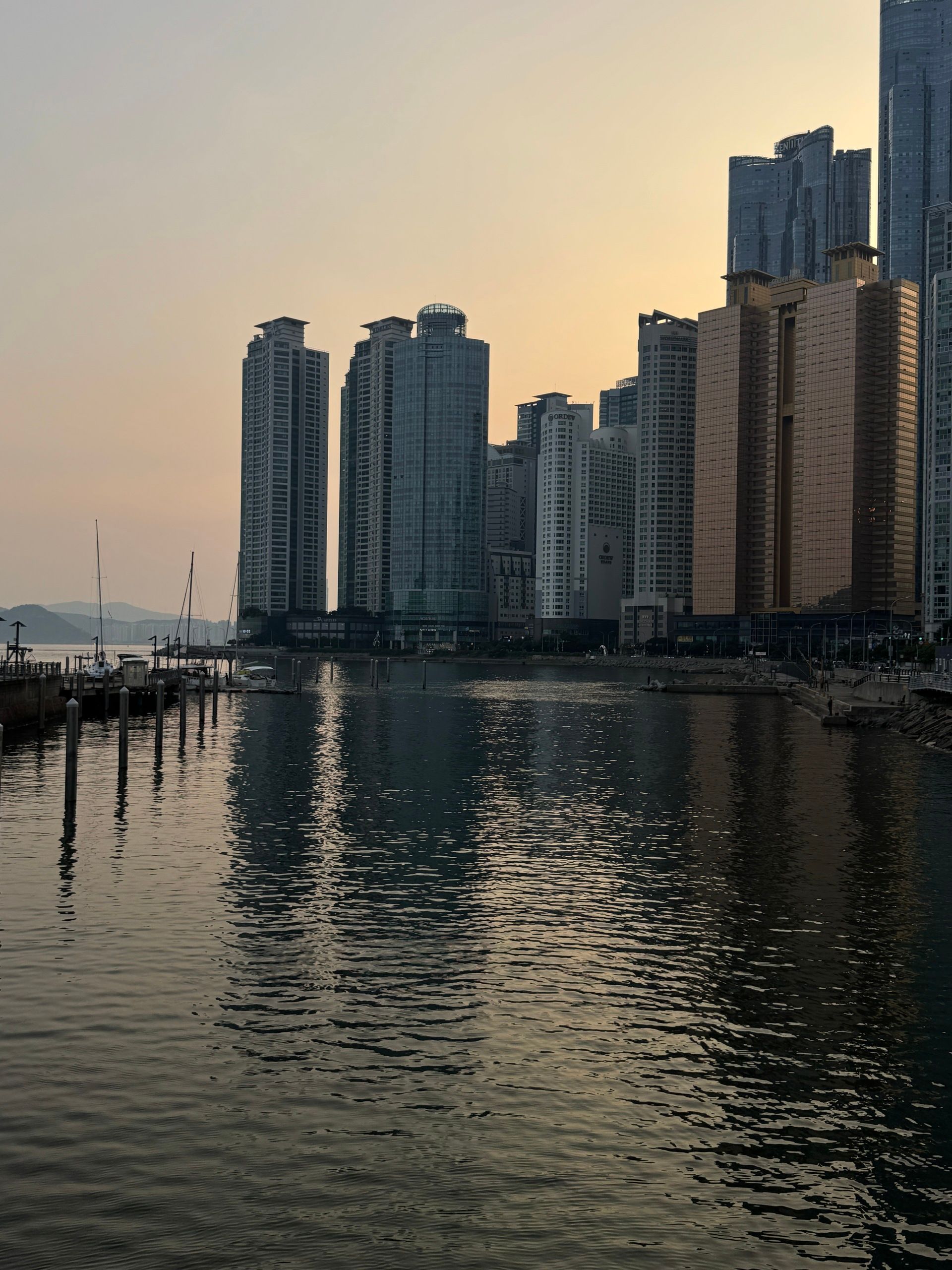 2 |  3 |
This summer in Busan was extremely hot—even hotter than Seoul, which almost never happens. Normally, Busan is warmer in winter and cooler in summer compared to Seoul. And usually, Korea has heavy monsoon rains starting in early summer, but this year, there was almost none—just three or four rainy days. (So whenever it rained at night, I’d go outside even at midnight, like I showed in one of my Instagram posts.) But after the rain, it became unbearably hot, to the point where I couldn’t sleep at night.
It’s only been a few days since the weather cooled enough for me to finally sleep at night. Until early September, it was unbearably hot.
Because of that, most beaches in Korea closed their swimming season early this year. But here in Haeundae, the beach stayed open until mid-September, the only one in my country. I went swimming in early September—the water was cold, but it felt wonderful. The waves weren’t too rough, and since I had formally learned swimming before, I wore my goggles and swam freestyle each time. But each time, I could feel how much my skills had declined. With so few chances to swim, I had lost my form. I plan to take lessons again someday to retrain my breathing and stroke technique.
By the way, when we say in Korea that a beach “closes,” it doesn’t mean you can’t go to the sand at all. It just means swimming in the sea is prohibited. Without lifeguards, the risk of drowning accidents rises, so swimming outside the official season is banned. If you’re caught swimming then, you may be fined (though I don’t know how strictly it’s enforced).
Still, many foreign tourists ignore this rule. Even after the season ends, they lie on the beach in bikinis, sunbathe, or swim in the sea. Honestly, I find it very unpleasant to watch. After all, “When in Rome, do as the Romans do.” Why come to Korea and disregard Korean rules and culture? Locals can’t possibly like that. This is how prejudice and resentment against foreigners grow.
Thinking you can just ignore the local laws and culture while treating the place like your playground is primitive. Why would anyone want to be disliked by the local residents instead of welcomed? But in Haeundae beach in my town, I see such people far too often.
Speaking of which, just last week in the state of Georgia, over 300 Koreans were arrested and detained at Hyundai’s battery plant. They say this was the single largest arrest of foreign workers in U.S. history. This incident has enraged the entire Korean public.
Under the Biden administration, foreign companies have invested around 200 trillion won (about, $143 billion USD) in the United States—and out of that, Korea alone accounts for 150 trillion won (108 billion dollars). Since 2024, Korea has become the largest investor in the U.S.
The U.S. desperately needed those investments, because when companies like Hyundai build factories in America, they create jobs. With the collapse of its manufacturing industries—including the auto industry—the U.S. needed this more than anyone.
That’s why Hyundai was building a battery plant in Georgia. But to construct such a plant, Korean expertise is essential. Local American workers simply can’t do it on their own. So, Korea dispatched skilled professionals to the U.S., who worked tirelessly to meet construction deadlines. And yet, these very Koreans—who were sent to build the factory—were arrested by U.S. authorities and thrown into jail. Does this make any sense at all?
Here is an excerpt from a related news report:
“Of the 475 people arrested, 300 were Korean temporary workers dispatched either to help construct new facilities or to train American workers to operate equipment at existing plants. Until the technologies developed in Korea are fully transferred, Korean experts must remain on-site. If Koreans continue to be handcuffed by U.S. immigration authorities, Korea may be forced to reconsider sending its workers to the U.S. altogether.”
And below is a related video, about eight minutes long. It explains the current situation very clearly, and I encourage you to watch it.
Here’s a rough summary of what the video says, in case the subtitles don’t work:
“The economy of southern Georgia once relied on agriculture and textiles, but both industries collapsed. People left to find work in other states, and those who stayed behind struggled with poverty and joblessness. Then, in 2009, Korea’s Hyundai and Kia Motors built factories there. Hyundai alone created tens of thousands of new jobs.
Because of that, the dying town suddenly saw restaurants, gas stations, and real estate businesses spring up, and the community came back to life. Local residents testified how grateful they were to Kia Motors for bringing hope to a place that once had none.
But on September 4, under the Trump administration, ICE carried out the largest-ever raid on alleged illegal employment at the Hyundai–LG Energy Solution joint battery plant. More than 300 Korean workers were arrested and detained.
According to an immigration lawyer there, all of those workers had entered the U.S. on legitimate B1 work visas. They were in charge of installing specialized equipment that no American experts were available to handle. Many had been scheduled to leave within three months, and some had only been in the U.S. for two weeks. Everyone was going to return home after finishing their assignments.
The Hyundai plant had been promoted as the largest economic development project in Georgia’s history. Now, with this raid, American jobs are suddenly under threat again. Georgia residents fear that if all the Koreans pull out, the area will once again be left empty and hopeless. Hyundai has already warned that if all Korean staff are withdrawn, both construction and plant operations will be delayed indefinitely.”
The person who reported this to ICE was a far-right Republican local politician named Tori Branum. In a media interview, she said:
“I wasn’t the first to try to contact ICE. There were people with video evidence of illegal and inhumane practices happening at the plant construction site. Whistleblowers claimed some workers were forced to work against their will. Some had overstayed their visas, others were undocumented, and some weren’t being paid on time or were earning below minimum wage.”
Every single claim is an outright lie.
How can someone tell such shameless falsehoods? How could a Korean worker who came to the U.S. for a three-month job assignment possibly be an ‘illegal aliens’ as the shitty Trump called them? They all have families and homes in Korea. They weren’t there to live in America—they were simply sent to work on the factory project for three months.
Do you also know that among those arrested were even Korean permanent residents—one of them married to a white American woman? How does that make sense? Since when is a green-card holder an “illegal immigrant”?
Because of this incident, Tori Branum’s social media has been flooded with angry comments. One critical comment cited in an American news article said:
“Imagine backing Trump’s ‘bring jobs back’ tariffs then cheering the ICE raid that nuked Georgia’s $4.3B Hyundai plant—475 workers arrested, 40k jobs gone. That’s not America First, that’s economic suicide. You’re a walking contradiction and a clown.”
Another commenter added:
“You have caused a serious geopolitical problem between us and South Korea with your massively ignorant actions.”
(Source: U.S. news report): https://www.thedailybeast.com/candidate-tori-branum-sparks-major-backlash-after-saying-she-tipped-off-feds-in-hyundai-raid/
However, she justified her actions as something she had “done right” and even uploaded a photo of herself holding a rifle on her social media. (In a country where people die every day from gun violence, it is shocking that a politician would proudly post a picture of herself holding an assault rifle.)

But despite her defiance, she eventually shut down her social media after being flooded with an overwhelming wave of critical comments.
The truth is, they had asked for investment to rebuild their collapsed industries, and our companies responded by pouring in hundreds of billions of dollars to build factories in the U.S., creating jobs and revitalizing local economies. Yet, the skilled Korean workers dispatched to carry out these projects were treated like criminals—arrested and detained. What kind of gangster-like, trash behavior is this? It really feels like the U.S. has been turning into a disgraceful country ever since Trump who has convictions for 34 crimes.
The Korean engineers and workers had been sent for the construction of this plant (a project backed by a $4.3 billion investment from Korean companies). Since the construction period was fixed, Korean specialists had to be dispatched to meet the deadline. But when they applied for proper work visas (B1), the U.S. authorities deliberately delayed or refused them. As a result, some had no choice but to enter on tourist visas (ESTA) just to help complete the work, planning to return to Korea within three months. And yet, the U.S. stormed in with guns, helicopters, and armored vehicles—arresting and detaining them.
Trump had constantly asked for massive investments to create jobs for Americans. Koreans built the plants, trained locals, and gave life back to dying towns. But then, those very workers were suddenly labeled as “illegal aliens,” handcuffed, shackled, and dragged into prison for over a week. This is f. madness.
Atlanta immigration attorney Charles Kuck, who represents four of the detained South Korean nationals, told The Associated Press on Monday that many were doing work that is authorized under the B-1 business visitor visa program. They had planned to be in the U.S. for just a couple of weeks and “never longer than 75 days,” he said.
News source : https://apnews.com/article/south-korea-us-georgia-raid-hyundai-24d990562f5ac20e7d3e983a77a4f7ff
Yesterday, after negotiations with our government, the detained workers were finally released and flown back to Korea on a chartered flight. Their testimonies about their suffering in detention are heartbreaking: the food was “worse than what you’d give to a goat,” and the drinking water smelled so foul it was undrinkable. Up to 70 people were crammed into one room, barely able to sleep. Many lost a shocking amount of weight during their ordeal. The anger is beyond words and public opinion in Korea is boiling over, demanding that every single investment in the U.S.—shipbuilding, semiconductors, battery plants, and more—be withdrawn immediately.
 A protester wearing a mask of President Donald Trump at a rally Tuesday near the U.S. Embassy in Seoul |  |  |
Speaking of visas—think about this: there are easily tens of thousands of Americans living in Korea right now, working as English teachers on tourist visas that allow six months’ stay. They are everywhere. What if we started reporting them to the police, rounding them up for working without proper visas, handcuffing them, chaining them, and broadcasting the arrests on the news? Imagine the outrage. Many Koreans and politicians are saying we should consider exactly that.
In 2007, Korea and the U.S. signed the Korea-U.S. FTA, agreeing to tariff-free free trade. But Trump unilaterally tore up the deal, demanding renegotiation. (What kind of gangster move is that?) Free trade was the promise, but when the U.S. faced a trade deficit, instead of improving their products, Trump slapped absurd tariffs on Korean goods. Instead of exporting junk food like McDonald’s and Burger King, they should have focused on quality. American products—electronics, cars, services—are losing appeal in Korea. Even Apple’s iPhone, once popular, is now selling less and less.
Trump has been extorting countries one by one, imposing outrageous tariffs on Korea, Japan, Europe—trying to fill the deficit by essentially shaking down other nations. In Korea, we call it “collecting protection money” like a thug. Meanwhile, ordinary Americans suffer as prices rise and the economy declines, but he doesn’t care.
And another thing: U.S. forces are stationed in Korea, but the truth is we no longer need them. Korea is already the 5th-strongest military power in the world. We are not afraid of North Korea. Everyone knows the U.S. bases in Korea are not really about North Korea—they are there to contain China. And yet, Trump shamelessly claimed in his campaign that the U.S. is “protecting Korea” without compensation. The truth? Every year we pay 1.5 trillion won (about $1.08 billion) for U.S. forces here. Now he is pressuring us to pay an additional 6 trillion won (about $4.3 billion).
Why is it that whenever Trump becomes president, he makes these absurd demands for defense costs? The U.S. is using our land for free to pursue its own strategic goals against China. If anything, they should be paying us. It is shameless and disgraceful. Trump has even threatened to withdraw U.S. troops unless Korea pays more. Frankly, we wish he would. The withdrawal of U.S. troops is the dream of many young Koreans. This gangster-like behavior is why our people despise him.
I hadn’t planned to write about politics, but I wanted to share what people in Korea are feeling right now.
That’s roughly the situation here now.
In fact, I had planned to fill this newsletter with lighter, more interesting stories about Korea—but the sudden mass arrest of Korean workers in Georgia has cast such a dark shadow over everything. I felt it was important to let you know what is going on and how Koreans feel.
Originally, I wanted to mix the Georgia issue with other topics, but I realized it would be better to separate them. This newsletter will close on a heavy note, and in the next one, I’ll return to lighter themes—K-food, K-beauty, (why the price of seaweed for gimbap has risen in Korea, why more and more American women are flying to Korea for cosmetic treatments, and so on). I’ll also share a story behind my previous album (it is not the story of “Hyun and Jisoo” this time).
As a preview for the next newsletter, here are some photos:
 | 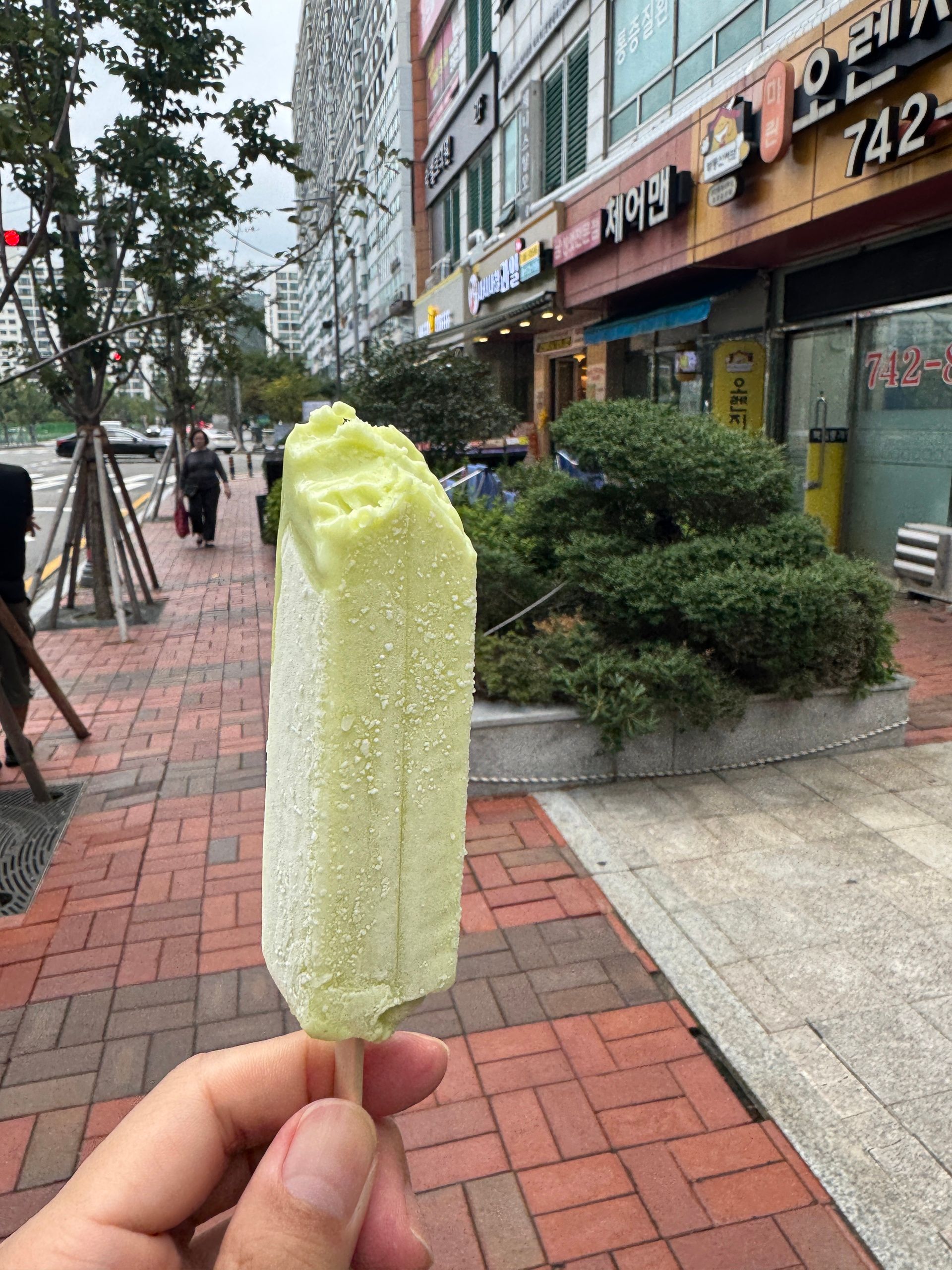 |
This has become a huge hit among foreign tourists lately. They say that it’s a “must-try” when visiting Korea. Personally, it’s my second favorite after (Pat ice cream )red bean ice cream. I took this photo just today (September 13, afternoon). Guess what it’s made of? Send me your answer in a reply, and I’ll reveal it in the next newsletter.
And what about this photo?

I’m not sure if such shops exist in your country, but in Korea they are everywhere. I’ll tell you more about this chain in the next newsletter.
So, the next issue will be lighter, more fun, and more sentimental.
Wishing you a good day,
Take care.
A.thentic Jong Hee